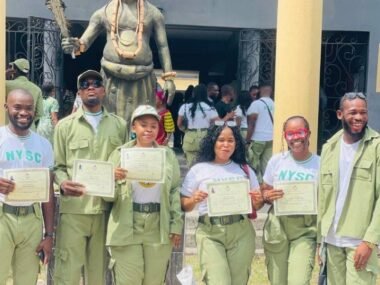

For married women, a common question arises: Will Married Woman Be Redeployed For Nysc ? The answer is yes—married female prospective corps members (PCMs) can request redeployment to the state where their husbands reside, a policy known as concessional deployment.
This provision ensures family unity by allowing married women to serve closer to their spouses, provided they submit the required documentation during registration or at the orientation camp. This guide explores the NYSC redeployment process for married women, including eligibility, required documents, application steps, challenges, and practical tips for a smooth service year. Whether you’re a newlywed preparing for NYSC or seeking clarity on redeployment, this article offers actionable insights to navigate the process effectively.
Understanding the NYSC and Concessional Deployment
The NYSC, established on May 22, 1973, by Decree No. 24, aims to promote national unity by deploying Nigerian graduates to states outside their regions of origin. This initiative encourages cultural exchange and nation-building, requiring corps members to engage in a three-week orientation camp followed by a year of service at a Place of Primary Assignment (PPA). While the program’s structure is uniform, married women receive special consideration to avoid separation from their families, aligning with NYSC’s recognition of familial responsibilities.
Concessional deployment is a policy designed specifically for married female PCMs, allowing them to serve in the same state or local government area where their husbands reside. This provision, rooted in the NYSC’s commitment to family welfare, ensures that married women can balance their national service obligations with their marital responsibilities. Unlike general redeployment requests, which may be based on health, security, or other grounds, concessional deployment prioritizes marital status and is typically processed with greater leniency, provided the necessary documentation is submitted.
Why Does NYSC Offer Concessional Deployment?
The rationale behind concessional deployment is to prevent the emotional and logistical strain of separating newlyweds or established couples. For instance, a married woman posted to a distant state may face challenges like emotional distress, financial burdens from travel, or difficulties managing family obligations, such as childcare.
By allowing redeployment to a spouse’s state of residence, NYSC ensures that corps members can serve effectively while maintaining family stability. This policy, however, is exclusive to legally married women, as there are currently no similar provisions for married men, though advocacy for such inclusion continues.
Eligibility for NYSC Redeployment as a Married Woman
To qualify for concessional deployment, a married female PCM must meet specific criteria:
-
Legal Marriage: The marriage must be legally recognized, typically evidenced by a marriage certificate from a court, religious institution, or traditional ceremony acknowledged by law.
-
Husband’s Domicile: The husband must have a verifiable place of residence or employment in a specific state, supported by documents like utility bills or an employer’s letter.
-
Age and Qualification: Like all NYSC participants, the PCM must be a graduate of a recognized tertiary institution and under 30 years old at the time of graduation. Those over 30 receive a Certificate of Exemption.
-
Registration Status: The PCM must indicate her marital status during online registration or at the orientation camp to initiate the redeployment process.
Single mothers or women in informal relationships are not eligible for concessional deployment, as the policy strictly applies to legally married women with supporting documentation.
Required Documents for NYSC Redeployment: Will Married Woman Be Redeployed For Nysc
To apply for concessional deployment, married women must provide a set of documents to verify their marital status and their husband’s place of residence. These documents are uploaded during online registration on the NYSC portal or presented at the orientation camp. The required documents include:
-
Marriage Certificate: A legal document from a court, church, mosque, or traditional registry confirming the marriage.
-
Husband’s Identification: A valid ID such as a driver’s license, national ID card, voter’s card, or international passport.
-
Proof of Husband’s Residence: Documents like utility bills, a tenancy agreement, or a letter from the husband’s employer verifying his place of residence or work.
-
Affidavit of Marriage: In some cases, an affidavit from a court may be required to affirm the marriage’s authenticity.
-
Change of Name Documentation: If the PCM has changed her name post-marriage, evidence such as a newspaper publication or affidavit may be needed.
-
Birth Certificates of Children (Optional): Including children’s birth certificates can strengthen the redeployment request, especially for nursing mothers.
-
Wedding Pictures: Some camps may request wedding photos as supplementary evidence.
These documents must be clear, legible, and in the specified format (usually JPEG or PDF) when uploaded to the NYSC portal. Incomplete or unverifiable documents may lead to delays or rejection of the redeployment request.
Step-by-Step Process for NYSC Redeployment
The redeployment process for married women is straightforward but requires careful attention to deadlines and documentation. Below is a detailed guide to applying for concessional deployment:
1. Online Registration
During NYSC online registration, select “Married” as your marital status on the NYSC portal. The system will prompt you to upload the required documents. Ensure all documents are clear, correctly formatted, and consistent with your registration details. Once submitted, NYSC officials will verify the documents, and if approved, your Call-Up Letter will reflect your husband’s state of residence.
2. Orientation Camp Registration
If you miss the opportunity to apply during online registration or are posted to a different state, you can request redeployment at the orientation camp. Report to the nearest NYSC orientation camp with physical copies of your documents and approach the Camp Director’s office. Submit a written application addressed to the NYSC Director-General through the State Coordinator, detailing your request for redeployment based on marital status. Include all required documents as evidence.
3. Document Verification
NYSC officials will review your documents to confirm their authenticity. This process may take a few days, during which you may need to remain at the camp or nearby. If approved, the redeployment will be updated on your NYSC dashboard, allowing you to reprint your Call-Up Letter with the new state of deployment.
4. Reporting to the New State
Once redeployment is granted, report to the NYSC secretariat in your husband’s state of residence to complete registration and receive your new PPA. You may need to attend a brief orientation or documentation process in the new state.
5. Post-Camp Adjustments
If redeployment is not approved before leaving the camp, you can still apply for relocation through the NYSC secretariat in your assigned state. However, this process may be more complex and require additional justification, such as security concerns or health issues.
Challenges Faced by Married Women in NYSC
While the concessional deployment policy is designed to support married women, several challenges may arise during the process or service year:
-
Document Verification Delays: Inconsistent or incomplete documentation can delay redeployment, requiring additional trips to the camp or secretariat.
-
Initial Posting Errors: Some married women are mistakenly posted to states far from their husbands due to errors during online registration or failure to indicate marital status.
-
Separation from Family: If redeployment is denied, serving in a distant state can cause emotional and financial strain, particularly for nursing mothers or those with young children.
-
PPA Rejection: Some PPAs may reject corps members due to budget constraints, requiring married women to secure a rejection letter and apply for a new assignment.
-
Balancing Responsibilities: Managing NYSC duties alongside family obligations, such as childcare, can be overwhelming, especially in rural postings with limited support systems.
-
Security Concerns: In volatile regions, safety risks may prompt additional redeployment requests, which require evidence like news reports to substantiate.
Tips for a Smooth NYSC Service Year
To navigate the NYSC as a married woman, consider the following practical tips:
-
Plan Ahead: Gather all required documents before registration and discuss redeployment plans with your spouse to ensure alignment.
-
Stay Informed: Regularly check the NYSC portal and official social media channels (@officialnyscng on X) for updates on policies and procedures.
-
Communicate with Your Spouse: Maintain open communication to manage expectations and coordinate logistics, especially if redeployment is delayed.
-
Seek Support: Connect with other married corps members for advice and emotional support, either at the camp or through NYSC community groups.
-
Balance Responsibilities: Prioritize tasks and set boundaries to avoid burnout, especially if juggling childcare or other family duties.
-
Explore SAED Opportunities: The NYSC’s Skill Acquisition and Entrepreneurship Development (SAED) program offers training in skills like tailoring, digital marketing, or agribusiness, which can supplement income or build long-term career prospects.
-
Budget Wisely: The ₦33,000 federal stipend may be insufficient, so explore PPAs offering additional allowances or approved side hustles like tutoring. Budget ₦2,000–₦5,000 monthly for supplies if posted to a rural school lacking resources.
Special Considerations for Nursing Mothers
Nursing mothers face unique challenges during NYSC, particularly if pregnant or caring for infants. The NYSC provides accommodations for nursing mothers, such as off-camp lodging during the orientation camp, as the camp environment is not suitable for pregnant women or infants.
Nursing mothers must still attend registration and documentation, but can stay off-camp until the camp closes. Including children’s birth certificates in the redeployment application can strengthen the case, emphasizing the need to remain close to family. However, single mothers are not eligible for concessional deployment unless legally married.
What Happens if Redeployment Is Denied?
If a redeployment request is denied, married women can take the following steps:
-
Reapply at Camp: If the initial application is rejected due to incomplete documents, resubmit with corrected or additional evidence at the orientation camp.
-
Request Relocation Post-Camp: After camp, apply for relocation through the NYSC secretariat, citing marital status, health, or security concerns. Provide supporting documents, such as medical reports or news articles on regional instability.
-
Seek Counseling: NYSC offers counseling services for corps members facing emotional or psychological challenges due to separation or other issues. Contact the camp or secretariat for support.
-
Appeal to Authorities: If all else fails, escalate the matter to the State Coordinator or Director-General with a formal letter, clearly outlining the reasons for redeployment.
Case Study: A Successful Redeployment Experience
Consider the story of Oluwanishola Akeju, a male corps member who, while not eligible for concessional deployment, faced a similar situation. Posted to Abia State while his pregnant wife remained in Ibadan, Oluwanishola applied for redeployment due to his wife’s medical condition (asthma and pregnancy). Initially doubtful, he was transparent with camp officials, who approved his redeployment to Ibadan just before his wife gave birth.
This case, while not specific to concessional deployment, highlights the importance of honesty, timely application, and providing compelling evidence. For married women, the process is often more streamlined due to the explicit policy favoring their redeployment.
Historical Context and Policy Evolution
Since its inception in 1973, the NYSC has evolved to address the needs of corps members, including married women. Early redeployment cases, as noted in a 1990 study, faced bureaucratic resistance, with state secretariats sometimes challenging approvals from the Directorate Headquarters. However, modern policies have streamlined the process, prioritizing family unity.
The introduction of online registration and document uploads has further simplified concessional deployment, reducing delays and improving transparency. Despite these advancements, challenges like insecurity and unemployment continue to affect the program’s effectiveness, prompting ongoing calls for reform.
Common Myths About NYSC Redeployment
Several misconceptions surround NYSC redeployment for married women:
-
Myth: Married women are automatically posted to their husband’s state.
Fact: Redeployment is not automatic; you must apply during registration or at camp with the required documents. -
Myth: Nursing mothers are exempt from NYSC.
Fact: Nursing mothers must serve but can request off-camp lodging and redeployment to their husband’s state. -
Myth: Married men can also apply for concessional deployment.
Fact: Currently, only married women are eligible, though advocacy for including men continues. -
Myth: Redeployment guarantees a comfortable PPA.
Fact: While redeployment ensures proximity to your spouse, PPAs vary, and some may reject corps members or lack resources.
Frequently Asked Questions: Will Married Woman Be Redeployed For Nysc
1. Can I apply for redeployment after the orientation camp?
Yes, but it’s best to apply during online registration or at camp. Post-camp relocation is possible but may require additional justification, such as health or security concerns.
2. What if I got married after NYSC registration?
If you marry after registration, bring your marriage certificate and other documents to the orientation camp to apply for redeployment.
3. Are nursing mothers required to stay in the camp?
No, nursing mothers can lodge off-camp but must attend registration and documentation.
4. What documents strengthen a redeployment request?
A marriage certificate, husband’s ID, proof of residence, and children’s birth certificates (if applicable) are critical. Ensure all are clear and verifiable.
5. Can single mothers apply for concessional deployment?
No, only legally married women with marriage certificates qualify. Single mothers may request relocation on other grounds, like health or security.
Conclusion: Will Married Woman Be Redeployed For Nysc
The NYSC’s concessional deployment policy ensures that married women can serve in their husband’s state, promoting family unity while fulfilling national service obligations. By providing the required documents—marriage certificate, husband’s ID, proof of residence, and more—PCMs can navigate the redeployment process with ease. Despite challenges like document verification delays or PPA rejections, proactive planning, clear communication, and leveraging NYSC resources can lead to a successful service year.
Married women are encouraged to stay informed via the NYSC portal (www.nysc.gov.ng) and engage fully with opportunities like SAED to maximize their experience. For personalized guidance, contact the NYSC FCT Secretariat or visit the nearest orientation camp. With the right approach, married female corps members can balance family life and national service, contributing to Nigeria’s development while fostering personal growth.