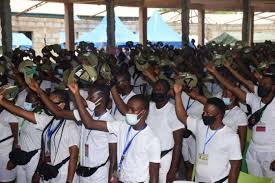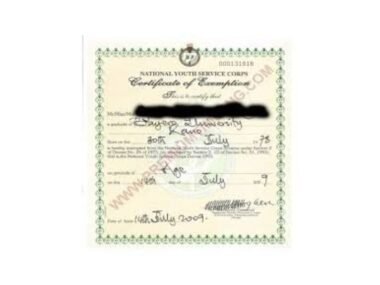

For every Nigerian graduate, the National Youth Service Corps (NYSC) program is more than a mandatory national service; it’s a cultural rite of passage, a year of profound transition, and often, the first real taste of independent life. It’s a mosaic of experiences—from the frenetic energy of the orientation camp to the challenges and rewards of your Primary Place of Assignment (PPA). But before the adventure begins, there is the gatekeeper: the registration process.
This isn’t just a bureaucratic hurdle to clear. Understanding the NYSC registration inside and out is your first official act as a corps member. It sets the tone for your entire service year. A smooth, error-free registration can lead to a preferred deployment, while a single mistake can mean delays, frustration, and even disqualification. This guide is designed to walk you through every step, not just with a list of requirements, but with the context and strategy you need to get it right the first time.
Beyond the Certificate: Unpacking the Core Philosophy of NYSC
To truly appreciate the registration process, it helps to understand the “why” behind it. Established in 1973 after the civil war, the NYSC was conceived as a tool for national reconstruction, reconciliation, and reintegration. The goal was to break down ethnic and cultural barriers by throwing young graduates from every corner of the country into a shared experience. You would serve in a state far from home, live among people with different traditions, and contribute your skills to national development.
This spirit of unity and service is the bedrock of the program. The registration isn’t merely about verifying your degree; it’s about verifying your eligibility to participate in this nation-building project. The rules, however strict they may seem, are designed to ensure fairness, maintain order, and uphold the integrity of this national institution.
The Non-Negotiables: Who is Eligible to Serve?
Let’s get down to brass tacks. The NYSC has a clear set of eligibility criteria. These aren’t suggestions; they are hard boundaries. Overlooking even one can bring your journey to a screeching halt before it even starts.
1. Nigerian Citizenship: This is the fundamental prerequisite. The scheme is designed for Nigerian citizens. You will be required to prove this during registration, typically with a National ID Number, an International Passport, or a state-of-origin certificate.
2. The Academic Benchmark: You must have graduated from an accredited tertiary institution—either a university or a polytechnic—within or outside Nigeria. This includes:
-
Full-Time Undergraduates: The traditional path.
-
Part-Time Graduates: Yes, you are eligible to serve.
-
Distance Learning Graduates: Provided the institution is accredited by the relevant bodies.
-
Sandwich Program Graduates: You are also included in the call-up.
What matters is the accreditation of your institution and the validity of your degree or Higher National Diploma (HND). If your institution isn’t recognized by the National Universities Commission (NUC) or the National Board for Technical Education (NBTE), your application will be rejected.
3. The Age Threshold: Perhaps the most discussed—and sometimes misunderstood—criterion is the age limit. The official rule states that you must be below the age of 30 at the time of your graduation. This is a critical distinction. If you graduated at 29, you are eligible, even if you register at 31. However, if your certificate states you graduated at 30 or above, you are technically ineligible.
There is, however, a notable exception that is often granted: holders of higher degrees (e.g., Master’s or PhDs). The Director-General of the NYSC has the discretionary power to mobilize such individuals despite being over 30. This is not automatic, but it is a common practice.
4. The One-Time Service Rule: You can only participate in the NYSC program once in your lifetime. If you served after your first degree, you cannot serve again after obtaining a Master’s degree. The system is designed to detect this, and attempting to register again constitutes fraud.
The Document Arsenal: Preparing Your Paperwork for Battle
Think of your documents as your armor and weapons for the registration process. Without the right ones, properly prepared, you won’t get far. Here’s a detailed breakdown of what you need and how to prepare it.
For All Graduates (The Universal Checklist):
-
A Valid Email Address: This is your digital identity for the process. Do not use a temporary or frivolous email. Create a professional one (e.g., firstname.lastname@gmail.com) as all communications, including your call-up letter, will be sent here.
-
A Functional Phone Number: This number will be tied to your profile for OTP verifications and SMS alerts. Ensure it’s a number you have consistent access to for the next several months.
-
A Recent Passport Photograph: This isn’t for your Instagram. The requirements are strict: a plain white background, a neutral expression, no glasses, and no headgear unless for religious reasons (and even then, it must not obscure your face). Get this done professionally.
-
A Valid Means of Identification: Your National Identity Number (NIN) is now paramount. You can also use an International Passport or a Driver’s License. Ensure these are not expired.
For Graduates of Nigerian Institutions:
-
Original Academic Credentials: This means your original degree certificate or HND. If you haven’t received the original, an official Statement of Result from your institution is acceptable. It must be stamped and signed appropriately. Photocopies or blurry scanned copies will be rejected.
-
JAMB Matriculation Number: This is crucial for university graduates. The NYSC will cross-reference your details with the JAMB database to confirm your admission was legitimate. Any discrepancy between the name on your JAMB registration and your degree certificate is a major red flag.
-
Academic Transcript: While not always uploaded by the individual (many institutions now handle this directly), you must ensure your school has uploaded your transcript to the NYSC portal. Follow up with your alma mater’s student affairs office to confirm this has been done.
For Foreign-Trained Graduates (The Enhanced Due Diligence):
Your process is more rigorous, and rightfully so. The NYSC needs to verify the authenticity of foreign qualifications.
-
Evaluation Letter from the Federal Ministry of Education: This is your single most important document. You must submit your original degree certificate and transcript to the Federal Ministry of Education in Abuja for evaluation. They will issue you a letter confirming the authenticity and Nigerian equivalence of your degree. Do not start NYSC registration without this.
-
International Passport: You must provide the data page of the passport you used for travel throughout your study period. It provides a travel history that supports your narrative of studying abroad.
-
Entry Visa and Study Permit: These documents prove you were legally in your country of study for educational purposes.
-
West African Examination Council (WAEC/GCE/NECO) Certificate: You must present your original senior secondary school certificate with a minimum of five (5) credits, including English Language and Mathematics. This proves you had the foundational qualifications to pursue tertiary education abroad.
The Registration Labyrinth: A Step-by-Step Walkthrough
The process is conducted online via the NYSC portal (www.nysc.org.ng). Here’s how to navigate it without losing your sanity.
Step 1: The Prelude – Read the Mobilization Announcement
Don’t just jump onto the portal. Wait for the official mobilization announcement from NYSC. This will be published in national dailies and on their website. It contains the specific dates for registration, the required batch, and any new instructions. Timing is everything.
Step 2: Account Creation – Claim Your Digital Identity
Click on “Fresh Registration” on the portal. You will be prompted to enter a valid email and password. This creates your profile. A verification link will be sent to your email. Click it to activate your account.
Step 3: The Heart of the Matter – Filling the Biodata Form
This is where focus is key. The form is lengthy and detailed. You will enter:
-
Biographical Information: Name, date of birth, state of origin, etc. This must match the information on your certificates exactly.
-
Contact Information: Provide a physical address and the phone number you listed.
-
Next of Kin Details: Provide a reliable person who can be contacted in case of an emergency.
-
Educational Information: You will input details of your tertiary education, including institution, degree, and class of degree.
Pro Tip: Have all your documents open and beside you as you fill this form. Double-check every field before moving to the next section. A typo in your name or date of birth can have catastrophic consequences.
Step 4: The Digital Upload – Presenting Your Evidence
You will be prompted to upload scanned copies of your documents. Ensure each scan is clear, legible, and in the specified format (usually JPEG or PDF). A blurry passport photo or a crooked certificate scan can be grounds for rejection.
Step 5: The Final Check – Review and Submit
This is your last chance to catch errors. The NYSC portal allows you to review all entered information. Scrutinize every detail. Once you click “Submit,” amendments become extremely difficult and often require a physical visit to the NYSC headquarters.
Step 6: The Proof – Printing the Registration Slip
Upon successful submission, you will be able to print your registration slip. This document is proof that you have completed the online part of the process. Print at least two copies and keep them safe. You will need them later.
Navigating the Minefield: Common Pitfalls and How to Avoid Them
-
The Name Discrepancy: This is the number one cause of problems. If your name is “Adenike Oyindamola Lawal” on your WAEC certificate, “Lawal Adenike O.” on your JAMB slip, and “Adenike O. Lawal” on your degree certificate, you have a problem. Standardize your name across all documents before you graduate. If a discrepancy already exists, you will need to swear an affidavit and/or get a newspaper publication to declare that all names belong to the same person.
-
Fake or Forged Documents: This should go without saying, but it’s a temptation for some. The NYSC has sophisticated means of verification. Submitting a forged statement of result or certificate will not only lead to disqualification but also prosecution. It is simply not worth it.
-
Late Registration: The registration window is usually short. Procrastination is your enemy. Register on the first or second day to avoid last-minute server crashes and panic.
-
Ignoring Official Channels: Rely only on the official NYSC website and verified social media pages for information. Do not trust “connection men” or blogs promising special deployment for a fee. They are almost always scams.
Special Considerations
-
Married Women: If you are a married woman and wish to be deployed to your husband’s state of residence, you must indicate this during registration. You will be required to upload a copy of your marriage certificate, a valid means of your husband’s identification, and proof of his residence (e.g., a utility bill). You must do this during the online registration. It is nearly impossible to change after submission.
-
People with Disabilities: The NYSC has provisions for corps members with disabilities. You can indicate your specific needs during registration to ensure you are deployed to a PPA and accommodation that can reasonably accommodate you.
Conclusion
Once your registration is verified and approved, you will be mobilized into a batch. A few weeks later, you will be able to check your dashboard and print your call-up letter. This letter is your golden ticket. It states your state of deployment and the date you are to report to the orientation camp.
This is where the real adventure begins. The registration process is the gate you must pass through to enter a year that will challenge you, change you, and connect you to the vast and vibrant tapestry of Nigeria in a way you never thought possible. Do it right, and you can step through that gate with confidence, ready to serve.