
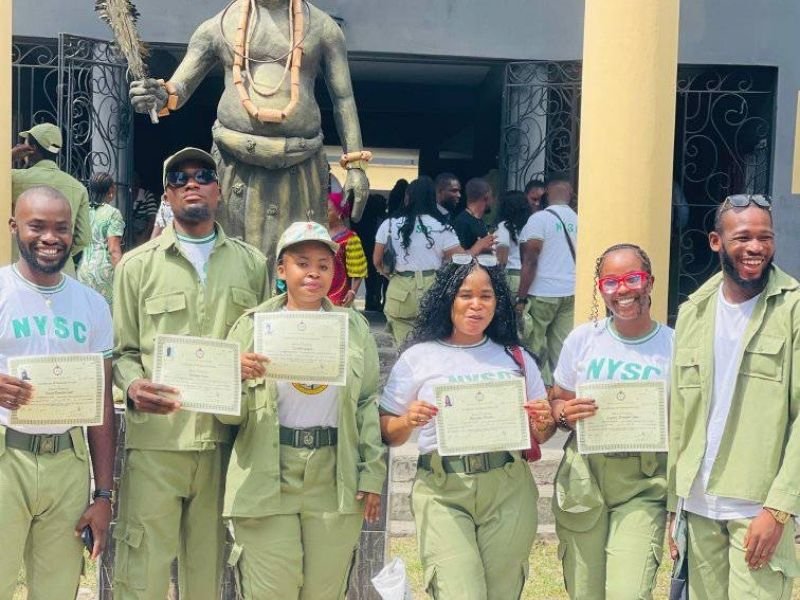
If you’re a Nigerian graduate wondering what the NYSC Discharge Certificate really means, it’s essentially the official document that proves you’ve completed your mandatory one-year National Youth Service Corps (NYSC) program. This certificate isn’t just a piece of paper—it’s a key requirement for many jobs, further education, and even some government processes in Nigeria.
Issued by the NYSC Directorate, it confirms your participation in national service, including orientation camp, primary assignment, and community development service. Whether you’re fresh out of university or looking back on your service year, knowing how to obtain and use this certificate can open doors in your career and beyond.
The Origins and Purpose of NYSC in Nigeria
To fully grasp the significance of the NYSC Discharge Certificate, it’s helpful to look back at how the program started. Established in 1973 by the military regime of General Yakubu Gowon, the NYSC was born out of the need to foster national unity after the Nigerian Civil War. The idea was simple yet profound: send young graduates from different parts of the country to serve in unfamiliar regions, promoting cultural exchange, tolerance, and a sense of shared identity.
Over the decades, the program has evolved but stayed true to its core objectives. Today, it aims to inculcate discipline, self-reliance, and patriotism in Nigerian youth. Participants, known as corps members, are deployed across states for a year of service that includes skill acquisition, community projects, and professional experience. The discharge certificate serves as the capstone of this journey, symbolizing not just completion but also personal growth and contribution to nation-building.
In practical terms, the NYSC isn’t optional for most graduates under 30 years old. It’s enshrined in the Nigerian Constitution and backed by Decree No. 51 of 1993. Skipping it can lead to barriers in employment, especially in public sector roles where the certificate is often a prerequisite. For instance, many federal and state government jobs explicitly require it during recruitment screenings.
Who Qualifies for the NYSC Discharge Certificate?
Eligibility for the NYSC program—and by extension, the discharge certificate—starts with your educational background. You must be a graduate from a recognized Nigerian university or an equivalent institution abroad. This includes holders of bachelor’s degrees, Higher National Diplomas (HNDs), or their foreign counterparts, provided they’ve been accredited by the National Universities Commission (NUC) or the National Board for Technical Education (NBTE).
Age is another factor: you should be no older than 30 at the time of graduation. If you’re over 30, you might qualify for an exemption certificate instead, which we’ll discuss later. Foreign-trained graduates need to verify their credentials through the Federal Ministry of Education before mobilization.
Once mobilized, corps members go through three main phases: orientation camp (three weeks of paramilitary training and lectures), primary assignment (placement in a workplace like a school, hospital, or company), and community development service (CDS), where you initiate or join projects benefiting your host community. Successful completion of all these, plus passing any required evaluations, leads to the discharge certificate.
It’s worth noting that part-time students or those from certain distance learning programs might not qualify unless their institutions are fully accredited for NYSC. Always check the NYSC portal during registration to confirm your status.
Step-by-Step Guide to Obtaining Your NYSC Discharge Certificate
Getting your hands on the NYSC Discharge Certificate involves a structured process that begins long before your service year ends. Here’s a detailed breakdown to help you navigate it smoothly.
First, registration and mobilization: Eligible graduates register online via the NYSC portal (nysc.org.ng) during the specified batch periods—usually three times a year (Batch A, B, and C). You’ll need your JAMB registration number, matriculation number, and other details. After registration, you’re assigned a call-up number and deployed to a state.
Upon arrival, you report to the orientation camp. This is where the adventure starts. Camp activities include drills, skill workshops, and social events. Attendance is mandatory; absconding can lead to extension of service or outright disqualification.
After camp, you’re posted to your Place of Primary Assignment (PPA). This could be in education, health, agriculture, or other sectors. You must accept the posting or request redeployment within the stipulated guidelines (e.g., for health or marital reasons). Throughout the year, you receive a monthly allowance (currently around ₦33,000, subject to changes) and log your activities in a monthly clearance form.
Community Development Service is equally crucial. Every corps member must participate in a CDS group—options range from health awareness campaigns to environmental projects. Your CDS supervisor evaluates your involvement, which factors into your final assessment.
As your service year winds down (typically after 12 months), you undergo passing-out procedures. This includes final clearance from your PPA, submission of a final report, and attendance at the Passing Out Parade (POP). If everything checks out—no outstanding issues like unpaid allowances or incomplete CDS—the NYSC state coordinator approves your discharge.
The certificate is usually issued during or shortly after the POP. It features your name, call-up number, state of deployment, and a unique certificate number for verification. In recent years, NYSC has digitized the process, allowing you to download a digital version from the portal, though the physical copy remains official for most purposes.
If you’re serving in a batch that overlaps with holidays or administrative delays, expect slight variations. Always stay updated via official NYSC channels to avoid misinformation from unofficial sources.
Why the NYSC Discharge Certificate Matters in Today’s Job Market
In Nigeria’s competitive job landscape, the NYSC Discharge Certificate isn’t just a formality—it’s a vital credential that employers scrutinize. Many job postings, especially in banking, oil and gas, and civil service, list it as a mandatory requirement. Why? It demonstrates your commitment to national duty, exposure to diverse environments, and basic professional experience.
For example, in the public sector, bodies like the Federal Civil Service Commission (FCSC) won’t consider applicants without it. Private companies, too, value the soft skills gained during service, such as teamwork, adaptability, and leadership from CDS projects. A survey by Jobberman, a leading Nigerian job site, found that over 70% of employers prefer candidates with NYSC experience, viewing it as a filter for reliability.
Beyond employment, the certificate is essential for further studies. Pursuing a master’s or PhD abroad? Many universities require proof of national service completion. It’s also needed for political aspirations—running for office often demands it as part of the eligibility criteria under electoral laws.
In immigration contexts, like applying for work visas or residency in other countries, the certificate verifies your educational timeline and national obligations. Losing it can complicate these processes, so treat it like your passport or degree certificate.
Common Challenges with NYSC Discharge Certificates and How to Overcome Them
No system is perfect, and the NYSC process has its hurdles. One frequent issue is delays in certificate issuance due to administrative backlogs or errors in documentation. If your certificate is delayed, follow up with your state secretariat promptly, armed with your call-up letter and ID card.
Lost or damaged certificates are another headache. NYSC doesn’t issue duplicates easily; instead, you apply for a “Certificate of Loss” or re-issuance through affidavit and police report. The process involves fees and can take months, so safeguard your original.
For those who couldn’t serve due to valid reasons—like medical conditions or being underage—exemption certificates are available. These are issued automatically for graduates over 30 or those with certain disabilities. However, they’re not the same as discharge certificates; exemptions note that you were excused, which might affect some job applications.
Exclusion letters are for part-time or distance learning graduates who aren’t eligible. Confusing these with discharge can lead to rejection, so clarify your status early.
Fraud is a growing concern. Fake certificates circulate, but employers verify via the NYSC online portal using your certificate number. Always obtain yours legitimately to avoid legal troubles.
To mitigate these, stay organized: keep digital copies, track deadlines, and engage with NYSC forums or alumni groups for advice.
Distinguishing Between NYSC Discharge, Exemption, and Exclusion Certificates
It’s easy to mix up the various NYSC certificates, but each serves a distinct purpose. The discharge certificate is for those who’ve fully completed the program, including all phases. It’s the most comprehensive and widely accepted.
Exemption certificates go to eligible graduates exempted from service, such as those over 30, serving military personnel, or individuals with national honors. This doesn’t imply incomplete education; it’s just a waiver.
Exclusion letters, on the other hand, are for graduates from programs not recognized for NYSC, like certain polytechnic courses or unaccredited foreign degrees. If you’re excluded, you can’t participate, and this letter confirms that.
Understanding these differences is crucial when applying for jobs. Some roles accept exemptions but not exclusions, while others require full discharge. Always read job ads carefully and consult NYSC if unsure.
Tips for Making the Most of Your NYSC Year to Earn That Certificate
Your service year is more than a checkbox—it’s an opportunity for growth. To ensure a smooth path to your discharge certificate, start by embracing your posting. Even if it’s not your preferred state, dive in: learn the local language, build networks, and excel at your PPA.
Document everything. Keep a journal of your CDS projects, complete with photos and reports. This not only helps with clearance but also builds your resume.
Skill up during service. NYSC offers workshops in entrepreneurship, ICT, and more. Certifications from these can complement your discharge certificate in job hunts.
Health and safety first: attend medical check-ups and avoid risky behaviors that could lead to extension or dismissal.
Finally, budget wisely. The allowance isn’t lavish, so side hustles (within NYSC rules) can help. Many corps members start businesses or freelance, turning service into a launchpad.
The Evolving Role of NYSC and Its Certificates in Modern Nigeria
As Nigeria progresses, questions arise about NYSC’s relevance. Critics argue it’s outdated amid insecurity and economic challenges, while supporters highlight its unity-building role. Recent reforms include digital mobilization and increased allowances, showing adaptation.
The discharge certificate, too, is modernizing. With blockchain verification on the horizon, fakes could become obsolete. Future batches might see more focus on tech and entrepreneurship, making the certificate even more valuable. In a globalized world, the NYSC experience sets Nigerian graduates apart, fostering resilience prized by international employers.
Frequently Asked Questions About NYSC Discharge Certificates
To wrap up, here are some common queries:
- Can I get a job without an NYSC Discharge Certificate? Yes, in some private sectors, but it’s rare in government or formal roles. Many allow “in lieu” letters if you’re still serving.
- How do I verify my certificate? Use the NYSC portal’s verification tool with your certificate number.
- What if I’m a foreign-trained graduate? Mobilize after credential evaluation; the process is similar.
- Is there a deadline to collect my certificate? Collect within a year of POP to avoid complications.
- Can I serve twice? No, it’s once per lifetime.
Conclusion