As a recent university graduate, stepping into the world of the National Youth Service Corps (NYSC) felt like crossing a threshold from the familiar halls of academia into the unknown territories of real-world responsibility and adventure. I remember the mix of excitement and apprehension bubbling inside me as I boarded the flight to Yola, the capital of Adamawa State in northeastern Nigeria. This article is my personal reflection on that pivotal journey from Yola International Airport to the NYSC Permanent Orientation Camp in Damare, Girei Local Government Area.
It’s not just a step-by-step guide on how to get from Yola Airport to NYSC Camp; it’s a heartfelt narrative woven with my thoughts, observations, and lessons learned along the way. If you’re a prospective corps member (PCM) searching for “how to get from Yola Airport to NYSC Camp Adamawa,” I hope my story provides both practical insights and inspiration for your own adventure. In writing this, I’ve aimed to make it as helpful as possible, drawing from my experiences while ensuring it’s optimized for readers like you. I’ll cover transportation options, distance, time estimates, and tips, all while reflecting on how this short trip symbolized a larger transition in my life. Let’s dive in.
Preparing for the Trip: Anticipation at Home
Before I even set foot on the plane, the journey had already begun in my mind. As a student from Lagos, the idea of serving in Adamawa—a state known for its rich cultural heritage, diverse landscapes, and historical significance—filled me with curiosity. Adamawa, named after Modibbo Adama, the founder of the Adamawa Emirate, is a blend of savanna grasslands, rivers like the Benue, and vibrant communities. I spent days researching “NYSC Camp Adamawa location” and “transportation from Yola Airport to Damare Camp,” poring over blogs, forums, and official NYSC updates to prepare.
The NYSC program, established in 1973 to foster national unity post-civil war, requires every Nigerian graduate under 30 to serve for a year. The three-week orientation camp is the kickoff, a boot camp of sorts, where we learn discipline, leadership, and cultural integration. For me, it was more than mandatory service; it was a chance to reflect on my identity as a Nigerian and contribute to nation-building. Packing my bags with essentials—white shorts, T-shirts, khaki uniforms, and documents—I couldn’t help but ponder: How would this experience shape me? Would the journey from the airport to camp mirror the broader path of self-discovery?
My flight from Murtala Muhammed International Airport in Lagos to Yola was smooth, lasting about an hour and a half. As the plane descended, I caught glimpses of the Gongola River snaking through the terrain, a reminder of Adamawa’s natural beauty. Touching down at Yola International Airport, also known as Jimeta-Yola Airport, marked the official start of my NYSC chapter.
First Impressions: Landing at Yola International Airport
Yola Airport is modest compared to Lagos’ bustling hub, but it exudes a welcoming charm. Located about 8 kilometers from Yola town center, it’s a gateway to the state’s northeastern vibes. Stepping off the plane, the warm, dry air hit me—a stark contrast to Lagos’ humidity. The airport terminal, with its simple architecture and local artwork depicting Fulani herdsmen and traditional dances, immediately immersed me in Adamawa’s culture.
I collected my luggage quickly, thanks to the efficient staff, and headed to the exit. Here, my reflections deepened: Airports are liminal spaces, aren’t they? Places of transition where old lives end and new ones begin. As I scanned for transportation options, I thought about how this moment encapsulated the NYSC ethos—leaving comfort zones to embrace diversity.
For anyone wondering about “Yola Airport facilities,” it’s equipped with basic amenities: a few shops selling snacks, water, and local crafts; ATMs; and car rental desks. But for PCMs on a budget, public transport is key. I opted not to rent a car, as I wanted the authentic experience of mingling with locals.
Choosing Transportation: Options from Yola Airport to NYSC Camp
One of the first decisions I faced was how to get from Yola Airport to the NYSC Camp in Damare. Based on my research, the distance is approximately 20-25 kilometers, depending on the route, and it typically takes 25-40 minutes by road. Traffic in Yola is lighter than in major cities, but road conditions can vary, especially during rainy seasons when potholes emerge.
Here are the main transportation options I considered, optimized for those searching “best way from Yola Airport to Damare NYSC Camp”:
1. Taxi or Drop Service
This was my choice—a direct taxi ride. At the airport, licensed taxis (often yellow or marked with airport badges) are readily available. I haggled with a driver named Musa, who quoted ₦3,000-₦4,000 for a solo drop to the camp. Sharing with other PCMs I met at baggage claim brought it down to ₦1,500 each. The ride was comfortable in an air-conditioned sedan, and Musa shared stories about Adamawa’s landmarks, like the Lamido’s Palace in Yola.
Reflecting on this, taxis offer convenience and safety, especially for first-timers. Always confirm the fare upfront and use registered vehicles to avoid overcharges. In my mind, this option symbolized independence—charting my own path amid uncertainty.
2. Keke Napep (Tricycle)
For the budget-conscious, Kekes are ubiquitous in Yola. From the airport, you can take one to Vinikilang junction (about ₦500-₦700), then switch to another heading to Girei/Damare (another ₦300-₦500). Total cost: under ₦1,000. The journey might take longer, up to 45 minutes, due to stops.
I almost chose this for the adventure, imagining the wind in my hair as we zipped through Yola’s streets. It reminded me of student life—frugal yet exhilarating. However, with heavy luggage, I passed. Tip: If you’re light-packed, it’s a great way to observe local life, from market vendors to schoolchildren.
3. Commercial Bus or Shuttle
Occasionally, NYSC organizes shuttles during batch arrivals, but they’re not always reliable. Commercial buses from Yola town to Girei cost ₦200-₦300, but you’d need a taxi first to town (₦500 from the airport). This hybrid option suits groups.
In reflection, transportation choices reflect personal priorities—speed, cost, or immersion. I learned that flexibility is key in NYSC; rigid plans often crumble under real-world variables like traffic or weather.
4. Ride-Hailing Apps
Apps like Bolt or InDriver are emerging in Yola, offering rides for ₦2,000-₦3,000. Signal can be spotty at the airport, so have cash as backup. This modern option appealed to my tech-savvy side, but I stuck with traditional for cultural authenticity.
Safety note: Always travel in daylight if possible, and share your location with family. Adamawa is generally peaceful, but vigilance is wise.
The Journey Unfolds: Sights and Thoughts En Route
With my taxi secured, we set off from the airport along the main road toward Yola town, then north to Girei. The route follows the A13 highway, passing through Jimeta, a commercial hub with banks, hotels, and eateries. As we drove, I gazed at the landscape: flat savannas dotted with baobab trees, herds of cattle, and distant hills of the Mandara Mountains.
About 10 minutes in, we crossed the Benue River bridge—a majestic structure offering views of fishermen in canoes. This sight prompted reflection: Rivers symbolize flow and change, much like my transition from student to corps member. I pondered Nigeria’s diversity—how Adamawa’s mix of Fulani, Hausa, and over 80 ethnic groups enriches the nation.
Turning onto Lapondo Road, the scenery shifted to rural vibes: Mud-brick houses, children playing football, and women carrying firewood. Musa pointed out landmarks like the American University of Nigeria in Yola, reminding me of education’s role in development. The road to Damare is mostly paved but bumpy in spots, testing my patience—and metaphorically, my resilience.
Mid-journey, we stopped at a roadside kiosk for suya (spicy grilled meat) and cold drinks. Chatting with locals, I learned about Adamawa’s festivals, like the Vunon Festival. This interaction deepened my appreciation for NYSC’s unity goal; here I was, a southerner bonding over shared Nigerian experiences.
As we approached the camp, anxiety crept in: What if I didn’t fit in? But excitement overrode it. The total drive took 30 minutes, covering roughly 22 kilometers. In hindsight, this short trip felt eternal, packed with introspection.
Arrival at Damare NYSC Camp: First Steps into Service
The NYSC Permanent Orientation Camp in Damare sits on Lapondo Road, a sprawling site with barracks, parade grounds, and administrative blocks. Flanked by greenery, it’s a self-contained world for thousands of PCMs.
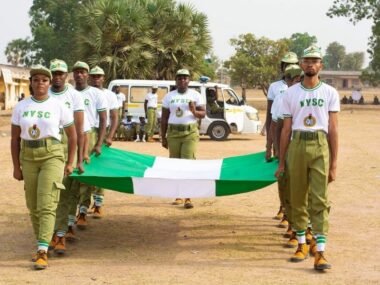
Pulling up to the gate, soldiers checked my call-up letter and ID. Inside, the energy was electric—music blaring, fellow corps members in white attire registering. I joined the queue for documentation, medical checks, and kit collection (khaki, boots, etc.).
Reflecting on arrival: It was overwhelming yet invigorating. The camp’s motto, “Service and Humility,” echoed in my mind as I settled into my platoon. That first night, under starry skies, I journaled about the journey’s symbolism—from airport isolation to camp camaraderie.
Life in Camp: Reflections on the Orientation Phase
The three weeks in camp were a whirlwind, but they built on that initial journey. Mornings started with 4 a.m. parades, teaching discipline. Lectures on skills acquisition, entrepreneurship, and national history broadened my worldview. Social nights with cultural dances fostered bonds across tribes.
Personally, I reflected on growth: The physical drills mirrored life’s challenges, pushing limits. Making friends from diverse backgrounds reinforced unity. One evening, during a bonfire, I shared my airport-to-camp story, realizing how small steps lead to big transformations.
Adamawa’s influence was profound—the local cuisine, like tuwo shinkafa (rice pudding) and kilishi (dried meat), became favorites. Visits to nearby sites like the Sukur Cultural Landscape (a UNESCO site) during excursions added depth.
Practical Tips for Future PCMs: Optimizing Your Journey
To make this article truly helpful, here are optimized tips for “traveling from Yola Airport to NYSC Camp Adamawa“:
- Budget Wisely: Allocate ₦2,000-₦5,000 for transport. Carry cash; ATMs might be scarce.
- Pack Smart: Essentials include sunscreen (Adamawa’s sun is intense), mosquito repellent, and comfortable shoes for the ride.
- Timing: Arrive early; camp gates close at dusk. If flying, book flights landing before 4 p.m.
- Health and Safety: Get vaccinated; stay hydrated. Use NYSC’s official app for updates.
- Alternatives if Delayed: If your flight is late, hotels in Yola, like Durbi Hotel, cost ₦5,000-₦10,000/night.
- Eco-Friendly Note: Opt for shared rides to reduce carbon footprint.
These tips stem from my reflections—preparation eases anxiety.
Broader Reflections: What the Journey Taught Me
Looking back, the trip from Yola Airport to NYSC Camp was more than logistics; it was a metaphor for life’s transitions. As a student, I was theoretical; NYSC made me practical. It taught resilience, cultural empathy, and the value of service.
In Adamawa, I discovered beauty in simplicity—the warmth of locals, the vast skies. This experience shaped my career aspirations, inspiring me to pursue community development. For readers searching for “NYSC experiences in Adamawa,” know it’s transformative. Embrace it fully.
Conclusion