
The National Youth Service Corps (NYSC) program officially began on May 22, 1973, established by Decree No. 24 under the military regime of General Yakubu Gowon.
Created as a post-civil war (1967-1970) reconciliation initiative, the scheme was designed to:
-
Rebuild national unity
-
Promote cultural integration
-
Engage Nigerian graduates in nation-building
This article explores NYSC’s historical roots, its founding principles, and how it has evolved over its 50+ years of existence. Whether you’re a prospective corps member or simply curious about this national institution, here’s everything you need to know about Nigeria’s iconic youth service program.
Did you know? The first NYSC batch had just 2,364 participants – a far cry from today’s 300,000+ annual corps members!
The Origin of NYSC
The National Youth Service Corps (NYSC) was officially established on May 22, 1973, by the military government of General Yakubu Gowon, under Decree No. 24 of 1973 (now an Act of Parliament). This initiative was born out of a critical need for national healing and unity following the Nigerian Civil War, which lasted from 1967 to 1970. The war, which was primarily fought between the Nigerian government and the secessionist state of Biafra, had deepened ethnic, regional, and religious divides within the country.
Prior to the war, Nigeria had already been experiencing significant tension between its diverse ethnic groups—primarily the Hausa-Fulani in the North, the Yoruba in the West, and the Igbo in the East. These divisions were exacerbated by colonial legacies, uneven development, and political rivalry. The devastating civil war only further strained national cohesion, revealing the urgent need for a unifying policy that could restore trust and build bridges across regions.
Recognizing this need, General Yakubu Gowon envisioned the NYSC as a platform for fostering national integration, patriotism, and mutual understanding among Nigeria’s youth. The idea was simple but powerful: expose young Nigerians to cultures, traditions, and lifestyles different from their own, by mandatorily posting them to serve in regions outside their origin. This would encourage empathy, reduce ethnic stereotypes, and help rebuild a sense of national identity.
How NYSC Was Structured at Inception
At its inception, the NYSC was designed with a structured, year-long framework that aimed to provide a balance between service to the nation and personal development. The key components of the NYSC program include:
1. Mobilization
After completing tertiary education (either at a university or a polytechnic), Nigerian graduates under the age of 30 are mobilized for national service. The mobilization process involves registration, verification of academic and personal credentials, and assignment to a batch and stream.
2. Orientation Camp
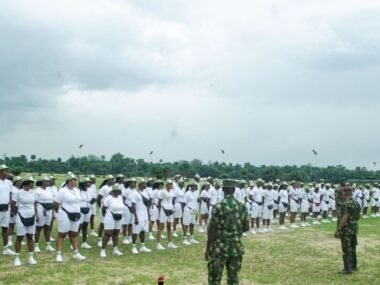
All mobilized corps members report to a designated orientation camp in a state outside their geopolitical zone or state of origin. The orientation typically lasts for three weeks and includes:
-
Military-style drills and physical training
-
Leadership and citizenship lectures
-
Language and cultural immersion programs
-
Team-building activities and paramilitary training
-
Introduction to the host community’s customs and expectations
The camp fosters discipline, teamwork, and a sense of shared purpose.
3. Primary Assignment
After the orientation camp, corps members are posted to their Place of Primary Assignment (PPA), where they are expected to serve for the remainder of the service year. Common sectors include:
-
Education (especially rural schools)
-
Healthcare (clinics and hospitals)
-
Public administration (government ministries and agencies)
-
Agriculture and rural development
-
Private sector placements (in some cases)
This phase is where corps members make their most direct contributions to their host communities.
4. Community Development Service (CDS)
Beyond their primary duties, corps members participate in Community Development Service (CDS) groups, which focus on creating positive, lasting impact within the local community. Projects may include:
-
Organizing free medical outreaches
-
Literacy and adult education programs
-
Environmental sanitation drives
-
Skill training for youth and women
-
Construction or rehabilitation of community infrastructure
CDS fosters volunteerism, innovation, and civic responsibility.
5. Passing Out Parade (POP)
At the end of the one-year service, corps members participate in a formal Passing Out Parade, marking the successful completion of their national service. They receive a Certificate of National Service, which is an important document for employment in Nigeria.
Exemptions and Exclusions
Participation is compulsory for all Nigerian graduates under 30. However, exemptions are granted to:
-
Individuals above the age limit (typically 30 and above)
-
Persons with disabilities or serious health conditions
-
Graduates who served in the Nigerian military or paramilitary organizations
The Impact of NYSC Since 1973
Over the past five decades, the NYSC has played a pivotal role in the socio-economic and political development of Nigeria. Its impact is far-reaching and evident in several areas:
1. National Unity and Integration
One of NYSC’s greatest achievements is its role in reducing ethnic and regional bias. By placing young Nigerians in unfamiliar environments, the scheme challenges prejudices and builds empathy. Many corps members form lifelong friendships, inter-ethnic marriages, and networks that transcend cultural boundaries.
2. Educational Development
Thousands of rural and underserved schools in Nigeria rely heavily on NYSC corps members to fill teaching gaps. Especially in remote communities where qualified teachers are scarce, corps members have played a vital role in improving access to quality education.
3. Healthcare Delivery
Medical corps members (doctors, nurses, pharmacists, lab scientists) are deployed to rural health centers where they provide essential healthcare services. In many cases, NYSC members are the only available medical personnel in such communities.
4. Skill Acquisition and Youth Empowerment
To address youth unemployment and encourage entrepreneurship, the NYSC introduced the Skills Acquisition and Entrepreneurship Development (SAED) program. This initiative trains corps members in various vocational skills such as:
-
Fashion design
-
ICT and digital skills
-
Agriculture
-
Craft and bead making
-
Welding, carpentry, and automobile repair
SAED helps corps members become self-reliant and job creators, rather than job seekers.
5. Emergency and Disaster Response
NYSC corps members have also been mobilized in times of national emergencies—such as during elections, census, vaccination campaigns, or natural disasters—playing critical roles in logistics, education, and community mobilization.
Challenges Facing the NYSC
Despite its laudable objectives, the NYSC scheme is not without its challenges:
-
Insecurity: Corps members posted to high-risk or conflict-prone areas face dangers such as kidnapping, banditry, and terrorism.
-
Poor Welfare: Delays in monthly allowances (popularly known as “allawee”), inadequate accommodation, and lack of health insurance have made service difficult for some participants.
-
Corruption and Posting Manipulation: There have been instances where individuals manipulate postings through bribery, undermining the integrity of the program.
-
Infrastructure Decay: Orientation camps and PPAs often lack adequate facilities, making the service experience physically and mentally taxing.
-
Relevance Debate: As Nigeria’s economy and job market evolve, some critics question whether NYSC still serves a necessary purpose or if it should be reformed or scrapped.
Conclusion
The National Youth Service Corps (NYSC) was born out of Nigeria’s need for national healing and integration after a brutal civil war. Since its establishment in 1973, it has become a powerful tool for fostering unity, patriotism, and development among Nigerian youths. From teaching in rural classrooms to delivering healthcare in underserved communities, corps members have made immense contributions to national growth.
While the scheme faces serious modern-day challenges—including insecurity and questions about its continued relevance—its core mission of uniting Nigeria’s diverse population remains crucial. With thoughtful reforms and better support systems, the NYSC has the potential to remain a pillar of national development and youth empowerment for decades to come.
As Nigeria continues to confront new socio-economic realities, the NYSC must evolve with the times—embracing innovation, enhancing youth skills, and staying true to its founding ideals of unity and service.