In 1973, General Yakubu Gowon, Nigeria’s former Head of State, established the National Youth Service Corps (NYSC) to foster national unity, reconciliation, and reconstruction in the aftermath of the Nigerian Civil War (1967–1970). The NYSC was created through Decree No. 24 on May 22, 1973, as a deliberate strategy to heal the wounds of a nation divided by ethnic and regional tensions, promote cross-cultural integration, and empower young graduates to contribute to Nigeria’s development.
This article explores the historical context, motivations, and enduring legacy of the NYSC, shedding light on why Gowon initiated this transformative program and its impact on Nigeria over the past five decades.
Historical Context: Nigeria’s Post-Civil War Challenges
To understand why Yakubu Gowon founded the NYSC, we must first examine the turbulent period that preceded its creation. Nigeria, a country with over 250 ethnic groups and diverse cultural identities, gained independence from British colonial rule in 1960. However, the early years of independence were marked by political instability, ethnic rivalries, and regional divisions. The Hausa, Yoruba, and Igbo, the three major ethnic groups, often clashed over political power and resource control, creating a fragile national fabric.
The situation escalated in 1966 with a military coup led by junior officers, predominantly of Igbo origin, which overthrew the civilian government. This coup resulted in the deaths of prominent northern and western leaders, including Prime Minister Sir Abubakar Tafawa Balewa and the Premier of the Northern Region, Sir Ahmadu Bello. The coup inflamed ethnic tensions, particularly in the north, where anti-Igbo riots led to the deaths of thousands of easterners. A counter-coup in July 1966, led by northern officers, brought Yakubu Gowon, then a Lieutenant Colonel, to power as Nigeria’s youngest Head of State at age 31.
The counter-coup and subsequent massacres of Igbo people in the north fueled secessionist sentiments in the Eastern Region. On May 30, 1967, Lt. Col. Chukwuemeka Odumegwu Ojukwu declared the Eastern Region the independent Republic of Biafra, triggering the Nigerian Civil War. The war, which lasted from 1967 to 1970, was one of the deadliest in modern history, with millions of lives lost due to violence, starvation, and disease. Gowon’s leadership during this period was centered on preserving Nigeria’s unity, famously declaring that keeping Nigeria one was a task that must be done.
After Biafra’s surrender in January 1970, Gowon introduced his “3R” policy—Reconstruction, Rehabilitation, and Reconciliation—to rebuild the nation and mend its fractured social fabric. The NYSC was a cornerstone of this policy, designed to address the deep-seated mistrust among ethnic groups and foster a sense of shared national identity among Nigeria’s youth.
The Birth of NYSC: Gowon’s Vision for National Unity
Yakubu Gowon, a northern Christian from the minority Ngas ethnic group, was a staunch nationalist who believed in the oneness of Nigeria. His experiences growing up in the diverse community of Wusasa, Zaria, where people of different ethnicities and religions coexisted, shaped his vision for a united Nigeria. Gowon saw the youth—particularly university graduates—as agents of change who could bridge ethnic divides and drive national development.
The NYSC was established on May 22, 1973, through Decree No. 24, with the primary objective of promoting national unity and integration. Gowon’s administration recognized that the civil war had deepened ethnic and regional divisions, with many Nigerians viewing those from other regions with suspicion. The NYSC was designed to break down these barriers by deploying young graduates to serve in states other than their own, exposing them to Nigeria’s cultural diversity and encouraging mutual understanding.
In Gowon’s own words, the NYSC was created to ensure that Nigeria remained “an indivisible entity” focused on sustainable development. During a 2019 sensitization workshop in Abuja, he explained that the scheme aimed to foster national unity and provide a platform for young Nigerians to contribute to a peaceful and prosperous nation. Despite initial resistance from students, who protested the mandatory nature of the program, Gowon emphasized its relevance in nation-building.
The NYSC was not just about unity; it was also a tool for reconstruction and rehabilitation. By mobilizing graduates to serve in rural and underserved areas, the program aimed to address critical needs in education, healthcare, and infrastructure. Corps members were deployed to schools, hospitals, and government agencies, bringing their skills to areas where they were most needed. This aligned with Gowon’s broader vision of rebuilding a nation scarred by war and fostering self-reliance among its youth.
Core Objectives of the NYSC
The NYSC was founded with clear objectives, as outlined in Decree No. 24 of 1973, which was later revised in 1993 under General Ibrahim Babangida’s administration. These objectives remain the guiding principles of the program:
-
Promoting National Unity: The NYSC seeks to develop common ties among Nigerian youths, encouraging them to transcend ethnic, religious, and regional loyalties. By serving in unfamiliar regions, corps members learn to appreciate Nigeria’s diversity and build lasting friendships across cultural lines.
-
Fostering Reconciliation: Post-civil war Nigeria needed a mechanism to heal ethnic wounds. The NYSC provided a platform for young Nigerians to work together, fostering reconciliation and mutual respect.
-
Driving National Development: The program mobilizes graduates to contribute to critical sectors such as education, healthcare, agriculture, and infrastructure. Corps members have been instrumental in providing skilled manpower to underserved areas, boosting Nigeria’s economic growth.
-
Encouraging Self-Reliance: The NYSC includes skills acquisition and entrepreneurship training during orientation camps, preparing corps members for life after graduation. Many use their stipends to start small businesses, laying the foundation for economic independence.
-
Exposing Youth to Diverse Cultures: By posting corps members to states other than their own, the NYSC exposes them to Nigeria’s rich cultural tapestry, promoting cross-cultural understanding and reducing stereotypes.
-
Preparing Youth for Leadership: The program instills discipline, leadership, and a sense of civic duty, equipping young Nigerians to become future leaders who prioritize national interests over tribal affiliations.
These objectives reflect Gowon’s vision of a united, prosperous Nigeria where young people play a central role in nation-building.
The NYSC Structure and Implementation
The NYSC program is structured to maximize its impact on both corps members and the communities they serve. It consists of four main phases:
-
Mobilization: Eligible graduates—initially university graduates, later expanded to include polytechnic and college of education graduates—are mobilized for service. Participants must be under 30 years old at the time of graduation, though exemptions are granted for those above this age or with specific conditions, such as physical disabilities or prior military service.
-
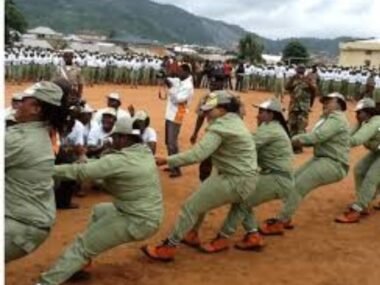
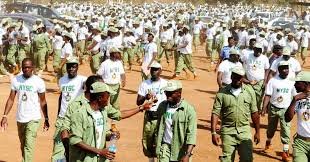
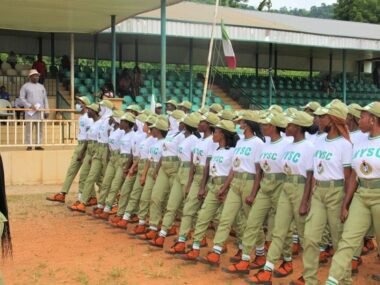
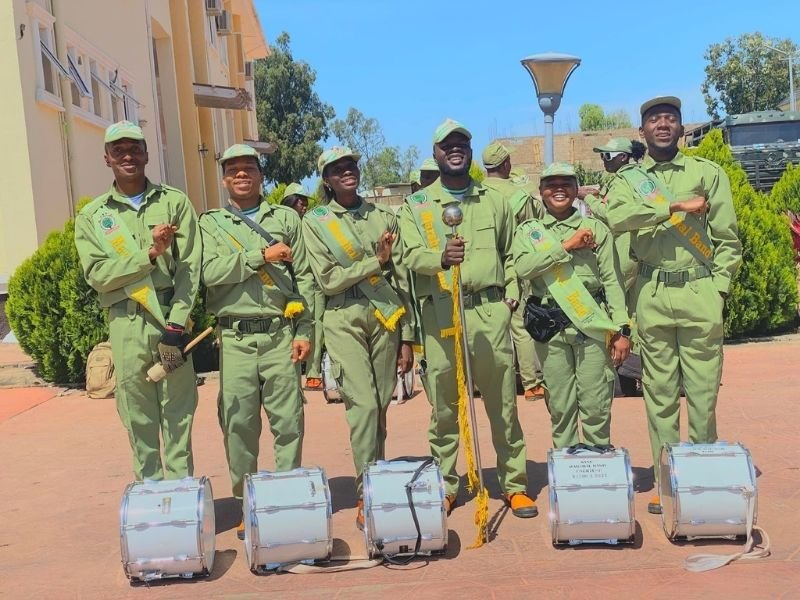
Orientation: Corps members undergo a three-week orientation camp, where they receive physical training, leadership drills, and lectures on Nigeria’s history and culture. The camp also includes skills acquisition programs to prepare them for their assignments and future careers.
-
Primary Assignment: After orientation, corps members are posted to various sectors, including schools, hospitals, government agencies, and private organizations, to serve for one year. The deployment policy ensures they work in regions different from their states of origin, promoting cultural exchange.
-
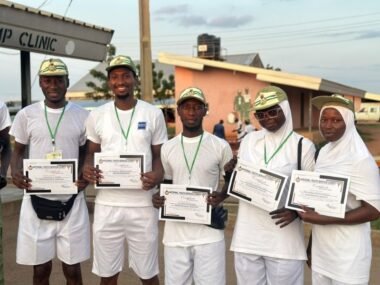
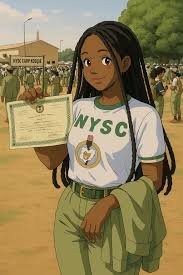
Winding-Up/Passing Out: At the end of the service year, corps members participate in a passing-out parade and receive a Certificate of National Service, a prerequisite for employment in many Nigerian organizations.
This structured approach ensures that the NYSC achieves its goals of unity, development, and youth empowerment while providing a transformative experience for participants.
Challenges and Initial Resistance
Despite its noble intentions, the NYSC faced significant challenges at its inception. Many Nigerian students opposed the program, viewing it as an imposition that disrupted their post-graduation plans. The mandatory nature of the service, coupled with the requirement to serve in unfamiliar regions, sparked protests across the country. Some feared for their safety, given the lingering ethnic tensions from the civil war.
Gowon acknowledged this resistance but remained steadfast in his belief that the NYSC was essential for Nigeria’s survival. Over time, the program gained acceptance as corps members began to see its benefits, such as exposure to new cultures, professional experience, and opportunities for personal growth. Gowon’s persistence paid off, as the NYSC evolved into a nationally recognized institution that has shaped generations of Nigerian graduates.
Logistical challenges also plagued the early years of the NYSC. With only a few thousand corps members in 1973, the program was manageable, but as Nigeria’s population grew, so did the number of participants. Today, the NYSC mobilizes over 350,000 corps members annually, placing immense pressure on orientation camps, accommodation, and stipends. Gowon has urged successive governments to prioritize the welfare of corps members and maintain NYSC facilities to sustain the program’s impact.
The Lasting Impact of the NYSC
Over the past five decades, the NYSC has left an indelible mark on Nigeria’s social, economic, and cultural landscape. Its contributions include:
-
National Integration: By deploying corps members to diverse regions, the NYSC has fostered friendships and marriages across ethnic lines, reducing stereotypes and promoting unity. Many Nigerians credit the program with broadening their understanding of the country’s diversity.
-
Human Capital Development: Corps members have provided skilled labor in critical sectors, particularly in rural areas. Teachers, doctors, and engineers serving in underserved communities have improved access to education, healthcare, and infrastructure.
-
Youth Empowerment: The skills acquisition programs introduced in orientation camps have enabled many corps members to start businesses, reducing unemployment and fostering entrepreneurship.
-
Cultural Exchange: The NYSC has created a platform for Nigerians to learn about and appreciate the cultures, languages, and traditions of other ethnic groups, strengthening national cohesion.
The program’s success is evident in its longevity and widespread acceptance. At its 50th anniversary in 2023, President Muhammadu Buhari praised Gowon for his vision, noting that the NYSC had achieved its goal of national integration by providing opportunities for cross-cultural interactions.
Criticisms and Calls for Reform
Despite its achievements, the NYSC has faced criticism in recent years. Some argue that it no longer serves its original purpose, given Nigeria’s evolving challenges, such as youth unemployment and insecurity. Corps members posted to volatile regions have faced safety risks, prompting calls for a review of the deployment policy. Others question the program’s relevance in a modern economy, where graduates struggle to find jobs despite their NYSC certificates.
Delays in stipend payments and inadequate facilities in orientation camps have also drawn criticism. Some suggest that the NYSC should be made voluntary or restructured to focus on skills development rather than mandatory service. However, proponents argue that the program remains a vital tool for national unity and youth empowerment, and its challenges can be addressed through better funding and management.
Gowon’s Legacy and the NYSC’s Future
Yakubu Gowon’s establishment of the NYSC is one of his most enduring legacies. His vision for a united Nigeria, born out of the ashes of the civil war, has been realized through the millions of graduates who have served as corps members. Gowon’s commitment to reconciliation and nation-building earned him praise as a statesman, with the Sultan of Sokoto describing him as a “beacon of hope” and a symbol of African unity.
As Nigeria navigates new challenges, the NYSC must evolve to remain relevant. Strengthening security measures, improving corps members’ welfare, and expanding skills acquisition programs are critical to sustaining the program’s impact. Gowon himself has called for continued government support to ensure the NYSC fulfills its mandate.
Conclusion
The National Youth Service Corps, initiated by General Yakubu Gowon in 1973, was a bold response to the ethnic divisions and devastation of the Nigerian Civil War. By mobilizing young graduates to serve in diverse regions, Gowon sought to foster national unity, reconciliation, and development.
Despite initial resistance and ongoing challenges, the NYSC has become a cornerstone of Nigeria’s nation-building efforts, shaping the lives of millions and promoting cross-cultural understanding. As the program marks over 50 years of existence, its legacy reflects Gowon’s vision of a united, prosperous Nigeria where the youth are empowered to drive change. With thoughtful reforms, the NYSC can continue to inspire future generations and uphold its role as a symbol of national unity.